How one motor controller can simplify your entire automation system
Automation systems have never been more capable — or more complex. As machines take on more axes, faster cycle times, and tighter tolerances, the motion control architecture underneath them tends to grow just as quickly. A single machine might rely on a stepper motor for precise indexing, a DC motor for a simple conveyor, and a brushless DC motor for a high-speed actuator. Each motor is well suited to its application, but complexity increases when different motor types require separate controllers, software tools, and commissioning processes.
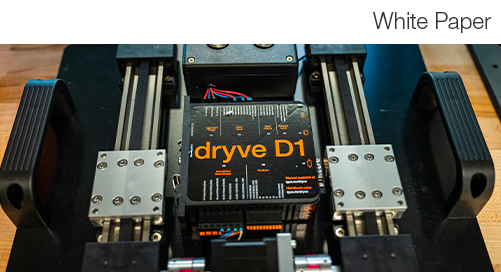
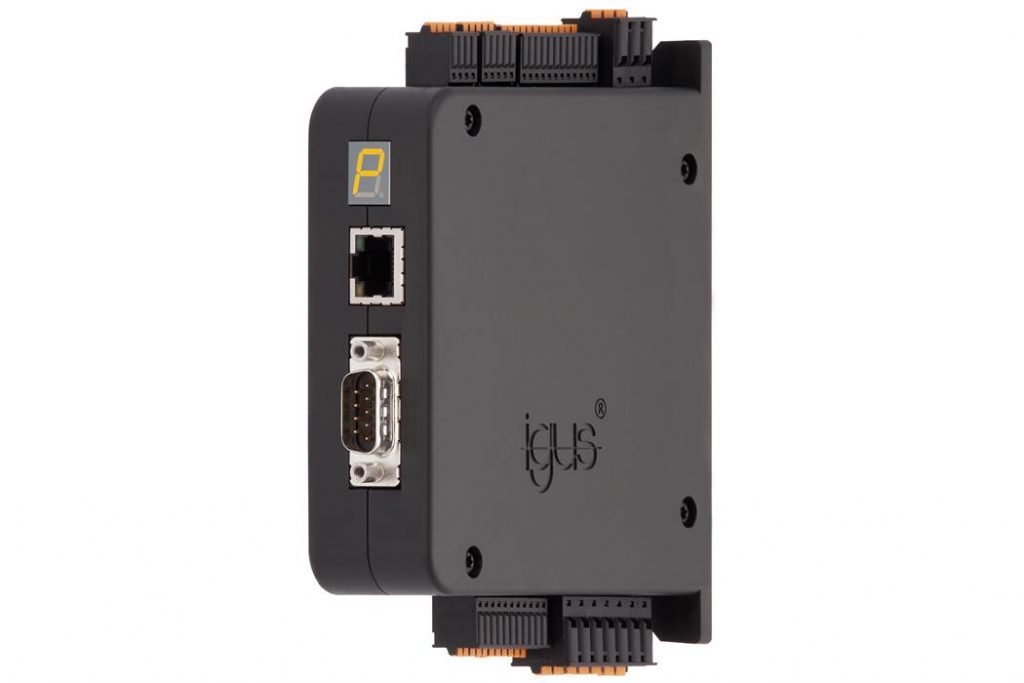
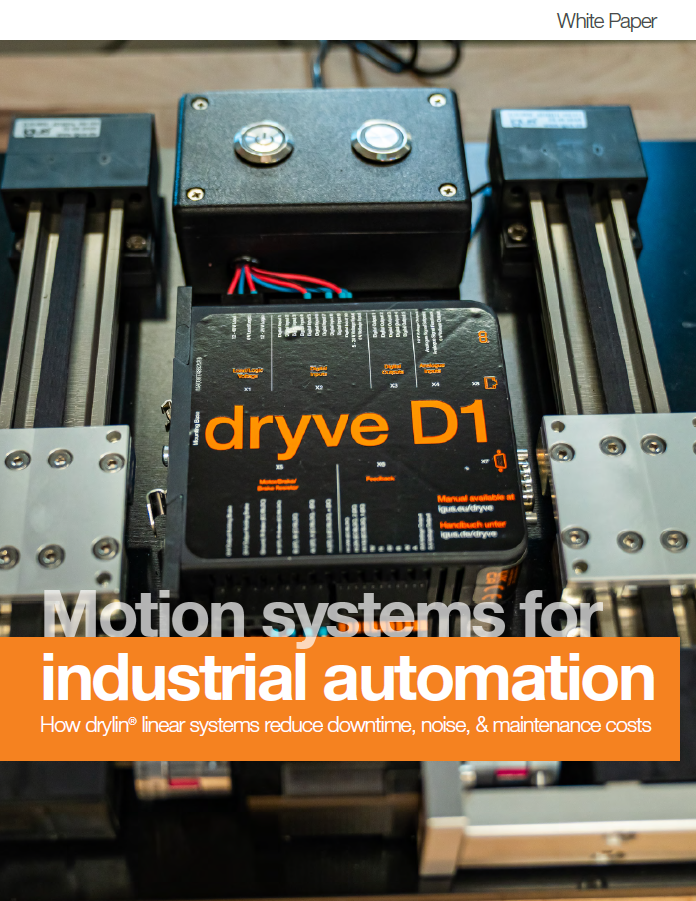
That fragmentation is where a lot of hidden costs live. The good news is that it does not have to be this way. By standardizing motion control on a single, flexible controller platform, machine builders can cut engineering time, shrink inventory, and simplify maintenance without giving up the freedom to choose the right motor for each job. The dryve® D1 from igus® was built around exactly that idea: one controller model that runs stepper, DC, and brushless DC motors, so the same familiar controller can appear on every axis of your machine.
The hidden cost of multiple motor controllers
When a machine uses several different motor types, it often ends up using several different controllers to match. On paper, each controller is selected for good reasons. In practice, the collection of mismatched controllers quietly drives up cost and complexity across the entire project.
Consider what happens when three motor types mean three controller families:
- Increased design complexity. Every controller has its own wiring, mounting, and power requirements that the machine designer has to account for separately.
- Multiple software tools. Each controller family typically comes with its own programming environment, and engineers have to stay fluent in all of them.
- More spare parts to stock. Different controllers mean different replacement units, and every additional part number adds to inventory and procurement overhead.
- Additional training. Maintenance teams have to learn the quirks of each platform rather than mastering one.
- Greater risk of compatibility issues. The more distinct systems you combine, the more interfaces there are to go wrong.
The real-world impact lands squarely on machine builders and OEMs. Commissioning takes longer because each controller has to be configured in its own way. System costs climb as the bill of materials fills with one-off components. And when something goes wrong on the floor, troubleshooting is slower because the technician first has to figure out which system they are even looking at. None of these costs show up on a single line item, which is precisely why they are so easy to overlook — and so worth eliminating.
Why motor controller standardization matters
Standardizing on one controller platform reverses each of those problems. Instead of managing a patchwork of controllers, you design around a single, well-understood building block.
The benefits compound quickly:
- Streamlined machine design, because every axis starts from the same controller and the same wiring logic.
- A lower component count, since one controller model covers multiple motor types.
- Simplified procurement and inventory, with fewer part numbers to source, stock, and track.
- Easier troubleshooting and maintenance, thanks to one consistent interface across the machine.
- A consistent user experience, so the skills your team builds on one application transfer directly to the next.
This kind of consolidation is valuable in almost any motion application, but it pays off especially well in industries that run many similar axes or deploy machines across multiple sites. Packaging automation, material handling systems, laboratory automation, assembly equipment, and pick-and-place applications all tend to combine several motor types within a single line. In each case, a common controller platform turns a fragmented set of controllers into a repeatable standard.
One controller for multiple motor technologies
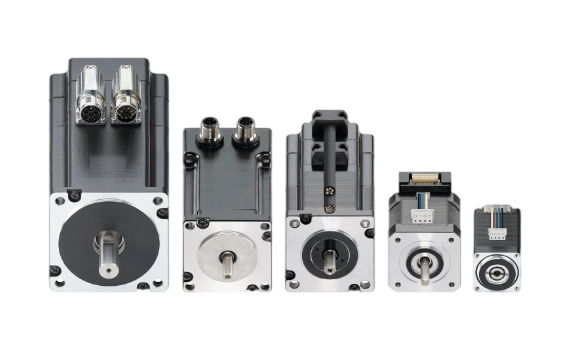
The reason the dryve D1 can serve as that standard is straightforward: it is designed to run all three of the motor types igus offers, rather than being locked to just one.
- Stepper motors are the workhorses of precise positioning. They hold position with high torque at standstill and deliver accurate, repeatable motion without feedback, which makes them a cost-effective choice for indexing and positioning tasks.
- DC motors offer simple position control at the lowest cost. They are quiet, easy to regulate, and well suited to general-purpose automation where the motion profile is straightforward.
- Brushless DC (BLDC/EC) motors run without carbon brushes, which gives them high efficiency, smooth operation, and a long, maintenance-free service life. They are the right pick for dynamic, high-speed movement.
Because one controller covers all three, engineers gain something that is easy to underestimate: the freedom to choose the best motor for each application without ever changing control platforms. If an axis needs the precision of a stepper today and a redesign later calls for the efficiency of a brushless motor, the controller does not have to change with it. That flexibility future-proofs a machine design, letting it evolve without dragging a new controller, new software, and new spare parts along for the ride.
Servo motor vs. stepper motor: how to choose the right one
Eliminate software installation and complex programming
Traditional controllers often require dedicated software installed on a specific computer — the kind of setup that becomes a bottleneck the moment that computer is unavailable or the software needs an update. The dryve D1 takes a different approach with a built-in web application.
Configuration happens entirely through a web browser. There is nothing to download and no application to install, which means you can reach the controller from a PC, tablet, or laptop already on hand, and there are no software versions to keep in sync across your team.
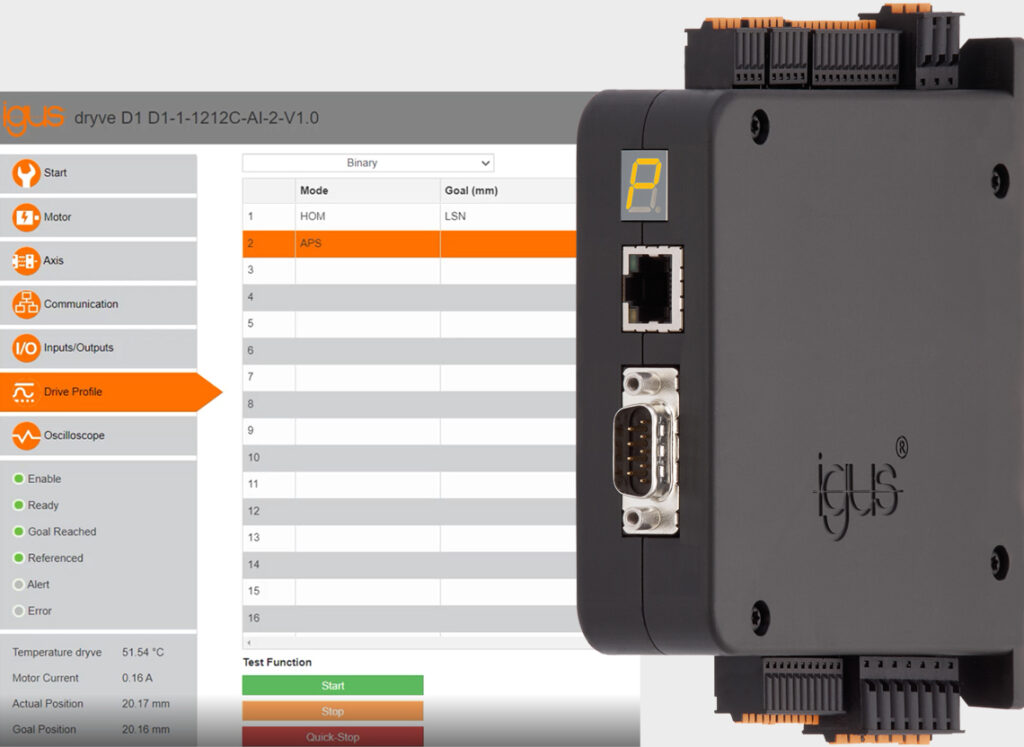
Commissioning is handled through the same interface by setting parameters rather than writing code. Within the web application, you configure the essentials of a motion profile — travel modes, target positions, acceleration, deceleration, speed, and pause times — and the controller executes them. For engineers and technicians, the payoff is faster startup, a much shorter learning curve, and the ability to deploy the same configuration approach consistently across every facility. Because the interface is browser-based and consistent, the person setting up a machine in one plant is working exactly the way their counterpart does in another.
Reduce dependence on PLC programming
Not every automation task needs the overhead of a full PLC program, and the dryve D1 is designed to reflect that. For many basic motion control tasks, it can operate as a standalone controller, executing its configured motion profile without a separate PLC in the loop. For simple automation systems, that alone can remove an entire layer of programming and hardware from the project.
When integration is required, the same controller steps up to it. dryve controllers communicate through Modbus TCP gateways, CANopen, Profinet, and Digital & Analog I/O, and they are compatible with many top-level industrial controllers, including those fromSiemens andBeckhoff. So a machine can start simple, running the D1 on its own, and later join a larger networked system without swapping the controller.
That combination — capable on its own, ready to integrate when needed — gives you a flexible architecture for a growing automation system. You are not forced to over-engineer a small machine, and you are not boxed in when it is time to scale up.
Simplifying commissioning and maintenance
The advantages of a single controller platform do not end at design. They carry straight through commissioning, day-to-day operation, and long-term upkeep.
Setup is faster because motion profiles are built from parameter settings rather than custom code, and positions can be established directly through teach-in functionality rather than calculated and entered by hand.
Maintenance benefits just as much. When every axis on a machine — and ideally every machine in a facility — shares the same interface, troubleshooting stops being a guessing game. A technician who understands one dryve D1 understands them all, which reduces the complexity that maintenance teams face and shortens the path to a fix.
Maintenance benefits just as much. When every axis on a machine — and ideally every machine in a facility — shares the same interface, troubleshooting stops being a guessing game. A technician who understands one dryve D1 understands them all, which reduces the complexity that maintenance teams face and shortens the path to a fix.
Together, these effects lower the total cost of ownership in ways that are easy to measure over a machine's life:
- Less training, because staff learn one system instead of several.
- Reduced downtime, because problems are diagnosed and resolved faster.
- Fewer replacement components to stock, because one controller model covers the machine.
Real applications where a single controller makes sense
The case for standardization is easiest to see in the applications where it already fits naturally.
Material handling systems frequently combine conveyors, positioning axes, and transfer stations on a single line. Running each of those on the same controller model keeps a complex system coherent and serviceable.
Packaging machinery relies on precise product indexing and frequent changeover adjustments, both of which benefit from a controller that can be reconfigured quickly through a browser rather than reprogrammed.
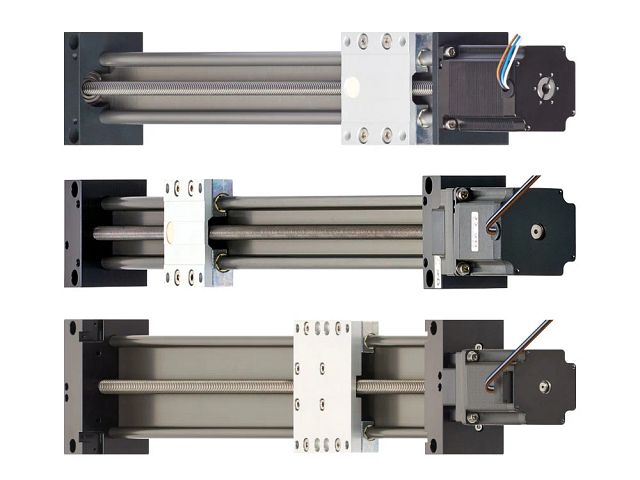
Laboratory and medical equipment often depends on compact positioning systems and precision movement tasks in a limited footprint. A single controller that pairs cleanly with small motors and drylin® linear actuators keeps these designs simple and repeatable.
Automated assembly systems built around pick-and-place operations and linear motion can mix motor types across their axes while keeping one common control standard, so the machine stays flexible without becoming fragmented.
Conclusion: simplify more than motion control
Consolidating motor control onto one flexible platform does more than tidy up a wiring diagram. It reduces design complexity, speeds up commissioning, and makes maintenance simpler for the people who keep machines running. It shrinks inventory to a smaller set of parts, and it preserves the flexibility to select the ideal motor for every application without committing to a different controller each time.
The dryve D1 was built to deliver that combination — one controller for stepper, DC, and brushless DC motors, configured through a browser and ready to run on its own or inside a larger system. For engineers and OEMs looking to standardize, that is a simpler foundation to build on.