
5 challenges of linear motion on boats — and how to solve them
A superyacht owner taps a panel and a section of the transom glides open to reveal a tender bay — silent, precise, effortless. It happens hundreds of times a season in an environment that is actively trying to destroy the mechanism behind it, and it's one of the hardest engineering problems on the vessel.
Linear motion is everywhere on modern boats, even when you can't see it: hatches and lift systems, seating, sliding doors and bulkheads, stabilizers and sensor deployment, telescopic radar masts and roofs. As vessels grow more automated, the number of moving systems onboard keeps climbing — along with the expectation that each one works flawlessly for years with minimal attention.
The catch is that few environments are as hostile to motion components as marine environments. Saltwater, spray, humidity, UV, constant vibration, and unpredictable shock loads punish anything that slides, rolls, or pivots; components that last a decade in a factory can seize within a season at sea. Below are the five challenges that most often decide whether a marine linear motion system succeeds or fails — and the strategies engineers use to solve them.
1. Corrosion from saltwater exposure
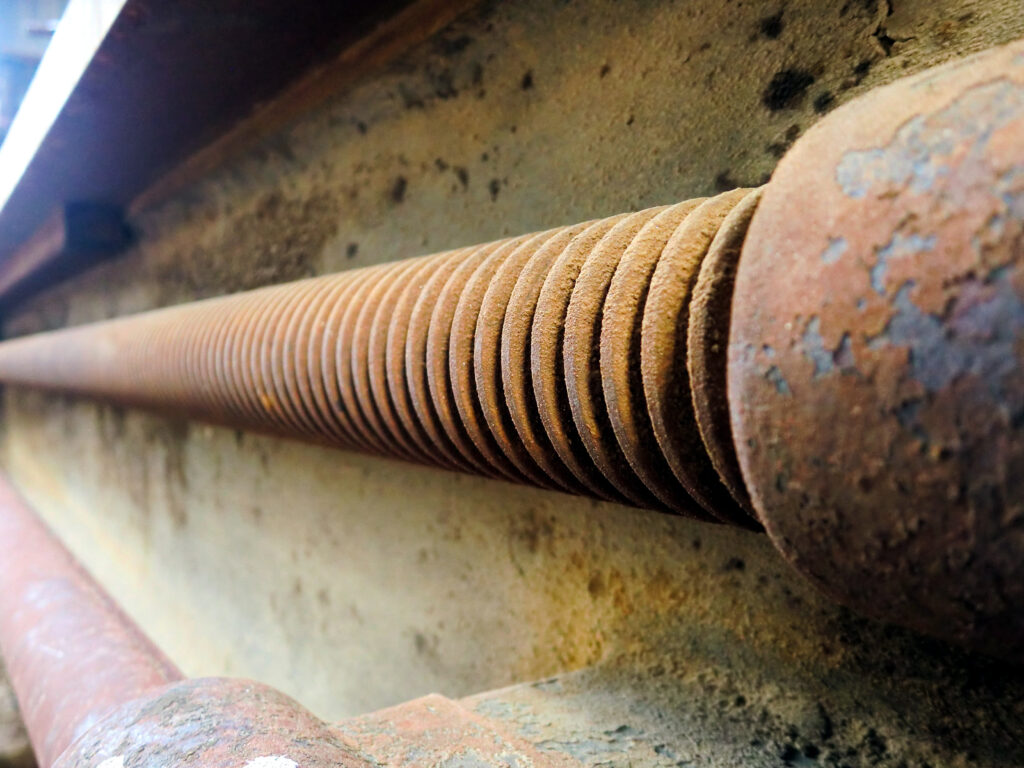
Corrosion is the defining problem of the marine environment, and it never stops. Salt-laden air, spray, and persistent humidity attack metal surfaces continuously, even below decks. For traditional systems built around metal rails, recirculating ball bearings, and steel shafts, the consequences are familiar: surfaces rust, rolling elements pit, and guides seize. Grease makes it worse — it washes out in wet conditions and traps abrasive salt crystals that accelerate wear. The result is a maintenance burden that is expensive and, on a boat, genuinely inconvenient, since a seized hatch or lift can take a vessel out of service at the worst possible moment.
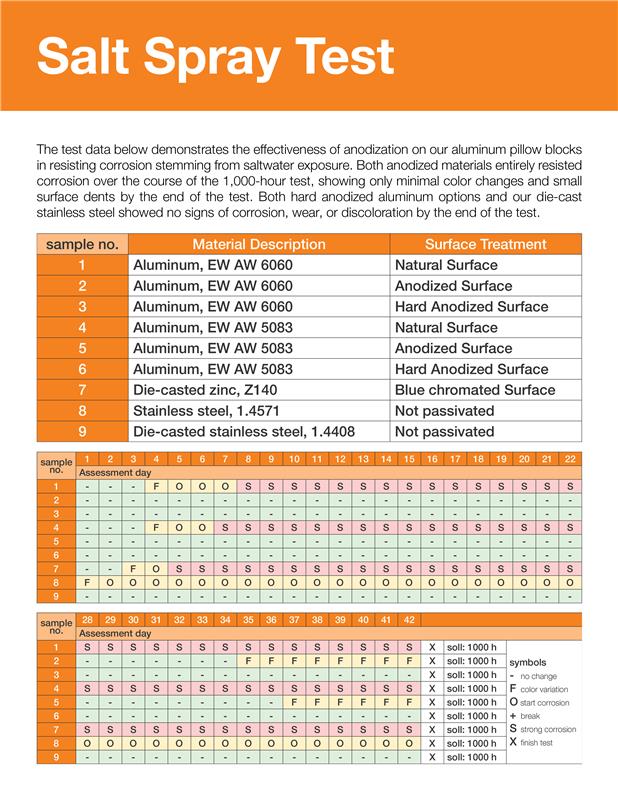
The most effective answer is to remove the materials that corrode in the first place: stainless steel and hard-anodized aluminum for structural elements, paired with self-lubricating tribo-polymers for the bearing surfaces. This is the principle behind drylin® linear guides and bearings, which run on iglide® tribo-polymer liners instead of steel balls and grease. Because the polymer is inherently self-lubricating, the systems run dry — there is no grease film to wash away and nothing for salt to cling to — so they shrug off the moisture and dirt that would compromise a lubricated bearing.
In practice this shows up across the vessel: sliding doors that keep moving smoothly despite constant exposure, radar and sensor mounts that survive years on an open mast, and tender lifts and electrically operated gangways that retract reliably after every use. The components most exposed to the sea benefit most from a dry-running, corrosion-immune design.
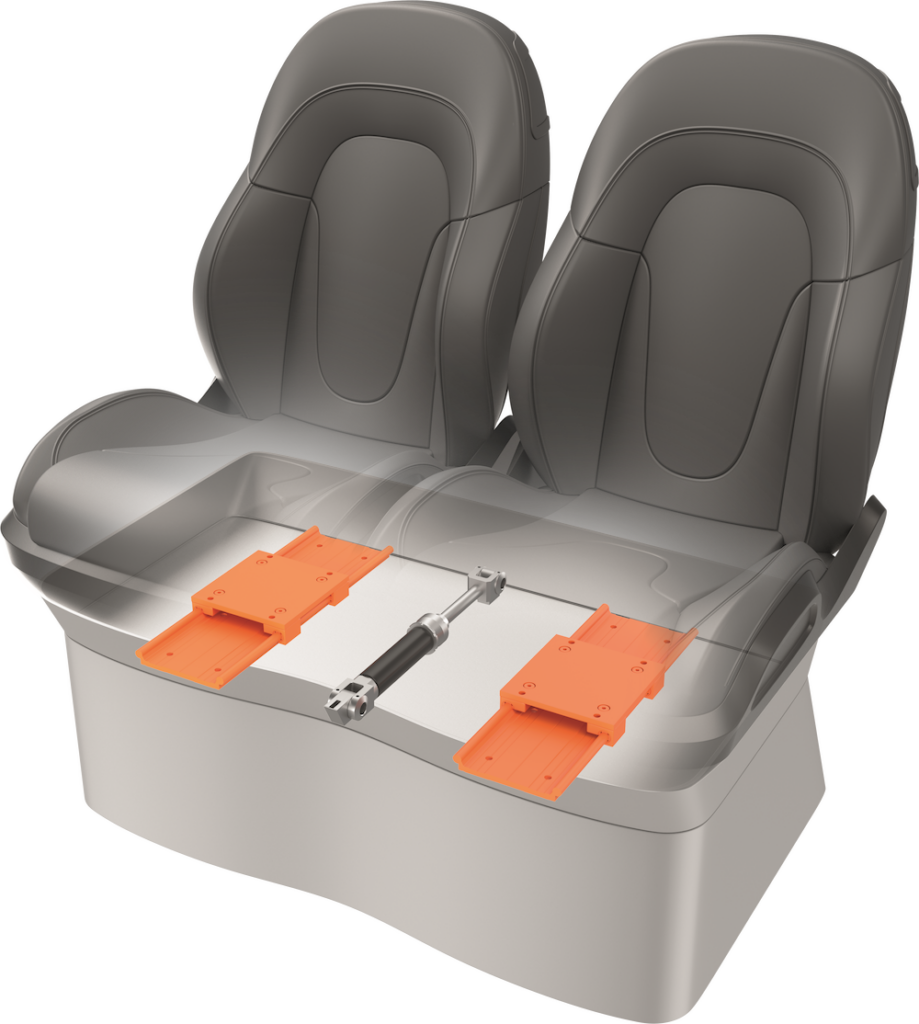
Infographic: Salt spray corrosion test for drylin W pillow blocks
2. Constant vibration and shock loads
A boat is never still. Engines generate continuous vibration, waves flex the hull and superstructure, and slamming into a swell delivers sharp shock loads that briefly multiply a component's static rating many times over. Over thousands of cycles, this works mechanical systems loose, wears them unevenly, and can ultimately jam them.
Two factors make this a harder problem to solve than it seems. First, hull structures flex under load, so a guide rail aligned perfectly at installation may be subtly twisted once the vessel is underway — and rigid, high-precision metal guides bind when that happens. Second, shock loads concentrate in exactly the systems people interact with most: seating and lifting mechanisms, where a sudden impact is both a reliability risk and a safety concern.
The design response is to build in compliance rather than fight it. Double-rail carriages accommodate structural flex and misalignment without binding, which is why those available across the drylin W rail system — including curved-rail versions — suit hulls that move under load. Just as important, polymer bearing elements dampen vibration far better than metal-on-metal contact: where steel rolling elements transmit and amplify vibration (and gradually dent and deform under repeated shock), the slight elasticity of a polymer bearing liner absorbs energy, runs quieter, and shrugs off impact loads.
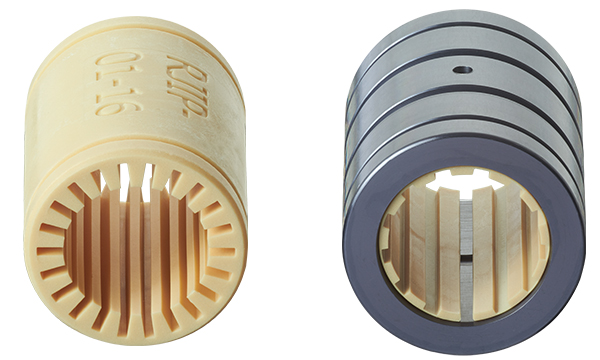
Those characteristics map directly onto the toughest jobs onboard: shock-absorbing helm and passenger seating, telescopic roofs and hardtops, boat and tender lifts, and offshore equipment that must keep working through sustained battering.
3. High maintenance requirements
Conventional linear systems carry an ongoing service tax: regular lubrication, periodic cleaning to clear salt and grit, and routine corrosion inspections. That schedule is demanding anywhere and especially punishing at sea, where the component you need to service is often buried behind joinery, beneath a deck hatch, or inside a sealed compartment. Maintenance access is frequently the real cost, not the part itself.
Eliminating that burden is one of the strongest arguments for rethinking componentry. Grease-free bearings and guides stretch service intervals dramatically and, in many cases, remove scheduled lubrication from the plan entirely. Because dry-running components have no grease to attract contamination, salt and dirt never build into the abrasive paste that grinds down lubricated systems — the system stays cleaner on its own, which is exactly what you want in a location you'd rather not open.
For an owner, operator, or refit yard, the benefits compound:
- Reduced labor, with fewer or no scheduled lubrication and cleaning tasks competing for time during a busy season.
- Fewer replacement parts, since corrosion-driven and grease-related failures are designed out rather than managed.
- Improved reliability in remote or offshore conditions, where a maintenance call is measured in days and dollars, not minutes.
Over a vessel's life, the difference between a system that demands attention every few months and one that simply runs is substantial — in dollars, in uptime, and in the goodwill of whoever has to crawl into the bilge to service it.
4. Limited space and complex installation areas
Space onboard is a zero-sum game. Every system competes for volume with accommodations, tankage, machinery, and structure, and designers are routinely asked to deliver full functionality from a mechanism that has to disappear into a void, a furniture cavity, or a slim hatch surround — compact and light, without giving up stroke, load capacity, or precision.

Three strategies do most of the work: compact electric linear actuators replace bulky hydraulic cylinders along with their pumps, reservoirs, and plumbing; lightweight polymer-based components cut system weight relative to all-metal equivalents, helping with both loading and stability; and modular linear guides simplify the physical install in confined, awkward locations.
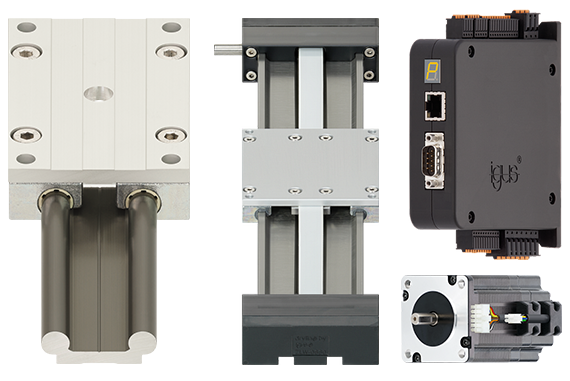
The igus range reflects this directly. Low-profile slides such as drylin N are built for shallow, tight interiors, while drylin NT telescopic rails extend well beyond their installed length for long reach from a short housing. For motorized motion, drylin electric actuators — belt-driven, screw-driven, and rack-and-pinion — deliver controlled travel in a compact, plug-and-play package, and lead-screw lift tables such as drylin SLW provide vertical adjustment where headroom for the mechanism is scarce.
Further reading: Telescopic rails vs. linear guides: which one does your application need?
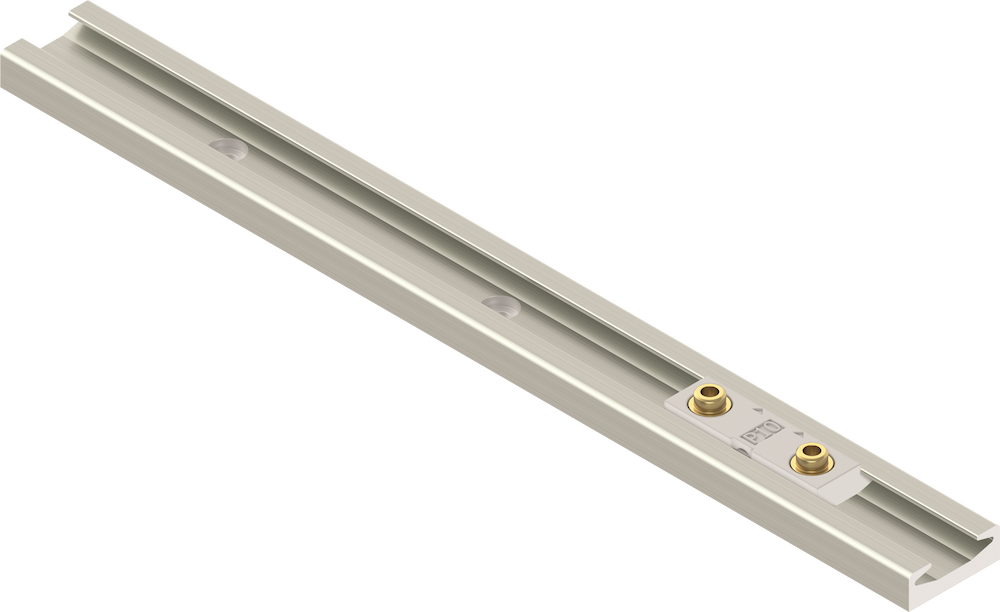
These are the technologies behind the hidden conveniences guests notice and the practical ones they don't: pop-up televisions and lift-and-stow displays, automated sunroofs, motorized storage compartments, and compact hatch systems that vanish flush into the deck or cabinetry when closed.
5. Cable management in moving applications
Wherever something moves, cables and hoses move with it — and that is its own reliability problem. Power, data, and hydraulic lines feeding a moving carriage, davit, or telescopic mast flex continuously, and without proper guidance they twist, chafe, kink, and fail. Add saltwater and UV to that fatigue and the failure clock speeds up considerably. Poor cable routing is a leading, and often overlooked, cause of downtime and safety incidents in motion systems.
The solution is to guide and protect the cables through their full range of travel. Corrosion-resistant cable carriers — like those of the e-chain® product line from igus — contain and route cables and hoses along a defined path, taking up the motion in a controlled bend radius rather than letting the cable flex randomly. A well-specified e-chain protects against abrasion and twisting, keeps the bend radius within the cable's rated limits, and dramatically extends service life. Tool-free designs make installation and maintenance faster — as valuable for retrofits and refits as for new builds.
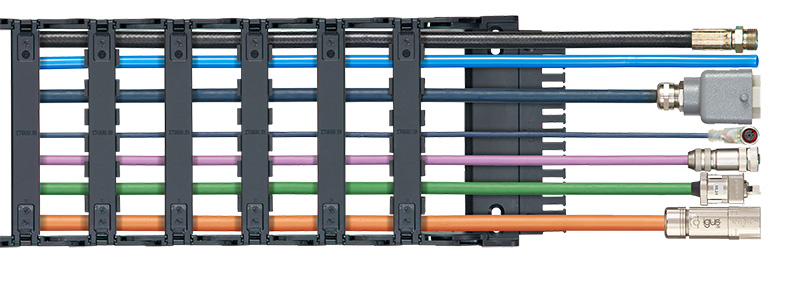
Onboard, cable carriers earn their place anywhere cables follow a moving element: davits and crane systems lowering tenders or equipment, telescopic roofs and hardtops, and deployable sensor and antenna systems. Pairing a corrosion-immune linear guide with a properly specified energy chain treats the moving structure and its services as a single coordinated system rather than two problems solved in isolation.
Why electric linear motion Is growing in marine applications
Across all five challenges, a common thread runs through the modern answers: electric motion is steadily displacing hydraulics, for clear, practical reasons.
Advantages over hydraulic systems
- No oil leaks — a meaningful environmental, safety, and cleanliness benefit on the water, where a leak is both a hazard and a liability.
- Lower maintenance, with no fluid to monitor, top up, or replace and no seals to fail.
- Cleaner operation, eliminating the oily residue and contamination risk of hydraulic plumbing.
- Improved energy efficiency, since electric actuators draw power only when they move rather than maintaining system pressure.
- Easier automation and synchronization, because electric drives integrate naturally with onboard control systems and can be coordinated precisely.
Emerging trends
That last point is where the market is heading. The rise of smart yachts and automated marine systems, the growth of offshore renewable energy, and the demand for remote-controlled marine equipment all favor motion that is electric, controllable, and maintenance-free by design. Clean, dry-running, network-friendly components aren't just easier to live with — they're the building blocks of the automated vessels and offshore platforms now coming online.
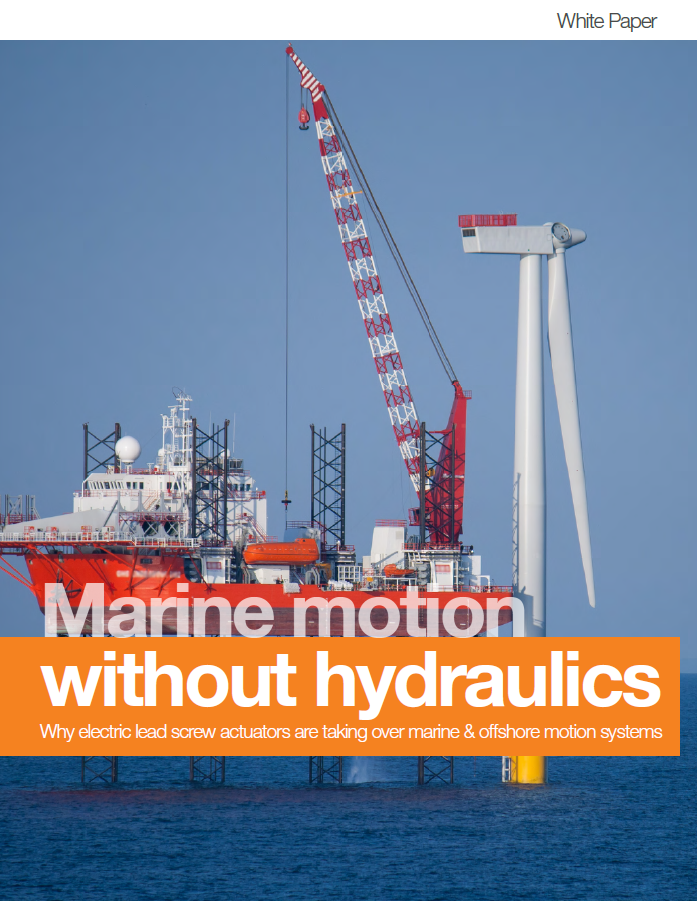
White Paper: Digitally networked energy chains enhance STS cranes in the Port of Rotterdam
Conclusion
The marine environment sets a high bar, and the five challenges above — corrosion, vibration and shock, maintenance burden, tight installation spaces, and cable management — most often separate a system that lasts from one that disappoints. None is solved by accident; each rewards deliberate material choices and a design philosophy built around corrosion resistance, maintenance-free operation, and proven reliability.
Modern linear motion technologies clear that bar by removing failure modes rather than managing them: self-lubricating iglide tribo-polymers that don't corrode or need grease, drylin guides that tolerate a flexing hull, compact electric actuators that reclaim space, and e-chains that keep cables alive through millions of cycles. The payoff is fewer service calls, less downtime, and motion systems that keep performing in conditions designed to defeat them — which, on a boat, is exactly the point. Designing around these principles from the outset is far easier than retrofitting reliability after the salt has already done its work.