

Telescopic rails vs. linear guides: which one does your application need?
A control panel has to swing clear of its enclosure. A tray of test instruments has to come all the way out, not most of the way. A battery pack has to slide past the frame rail so a technician can reach the connectors behind it. All three are linear motion problems, and all three get solved with the wrong hardware more often than they should.
The choice sits early in the design, which is where it gets expensive. Research on life cycle costing puts more than 70% of a product’s total cost as committed during the early design stage. Motion hardware is one of those early decisions. Rail type gets drawn into the enclosure, the panel cutouts follow it, and by the time the frame is welded, changing your mind means changing the machine.
One question settles most of these projects. This post covers that question, the four that follow it, and the cases where both technologies belong in the same machine.
What is a telescopic rail?
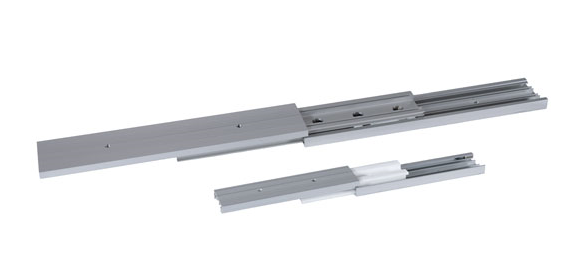
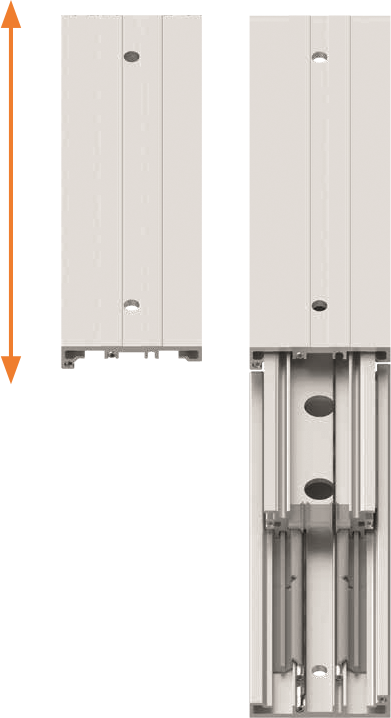
A telescopic rail is a linear motion element built from two or more nested profiles that slide within each other. The simplest version pairs an outer profile with an inner one. Add an intermediate profile between them and the rail reaches further from the same installed length, without taking up more room in the frame.
The moving profile rides on either a ball cage or a plastic sliding element. End stops and engagement points set where travel begins and ends, and a lock or a detent holds the extended position while someone works.
The assembly gets longer as it opens, and engineers describe that reach in three classes. Partial extension leaves part of the inner profile inside the outer. Full extension brings the inner profile out to its end. Over-extension carries the load past the end of the outer profile altogether, which is what a service drawer needs when the back of it has to be reachable.
What is a linear guide?
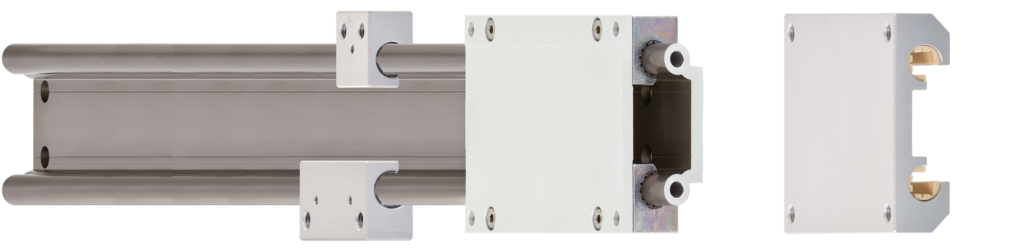
A linear guide is a rail with a carriage that travels along it. The carriage rides on recirculating balls or on a plain bearing liner, and the rail stays bolted to the machine frame while the carriage does the moving.
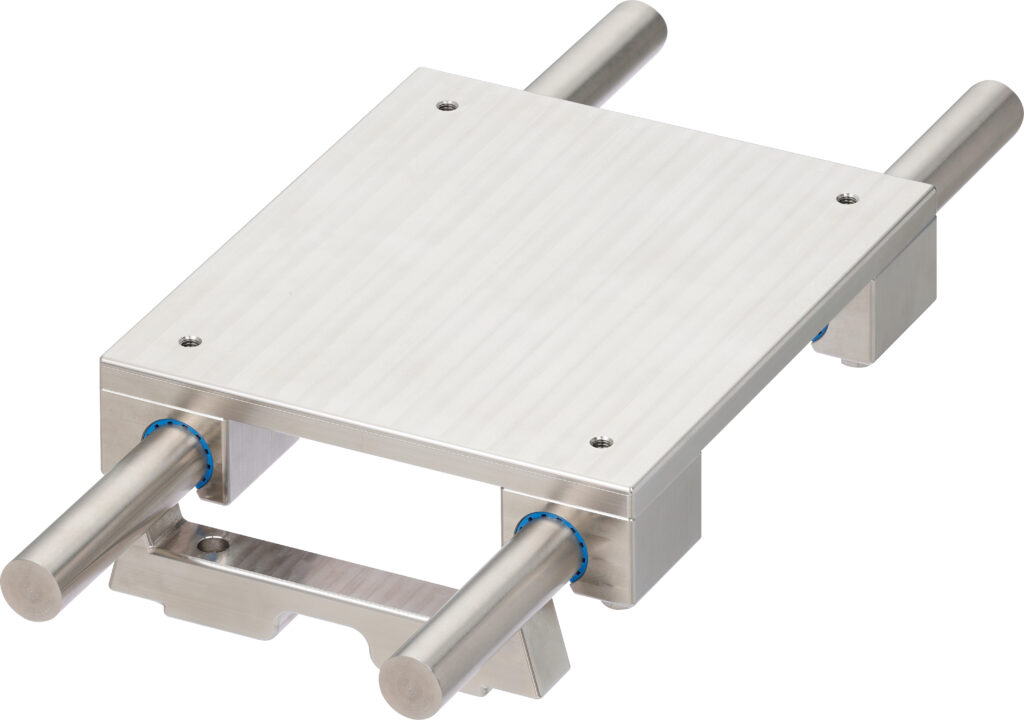
Travel is always shorter than the rail. A carriage needs its own length plus clearance at each end, so a given stroke always costs more rail than stroke. What that length buys is a carriage that holds position tightly and repeats it, cycle after cycle, for as long as the seals keep contamination out.
Guides are also more often driven than pushed. Add a belt or a lead screw and a motor, and what you are specifying is no longer a guide on its own. It is a linear actuator, with a controller and a duty cycle to size alongside it.
Does the load need to leave the machine?
Say the payload has to travel beyond the envelope it is mounted in: out of a cabinet, clear of a frame, past the edge of a bench. A linear guide cannot deliver that motion without leaving bare rail sticking into the room. A telescopic rail can, because the rail travels with the load rather than staying behind with the frame.
The ratio worth checking is stroke against installed length. A linear guide always spends more rail than it returns in travel. A telescopic rail returns travel roughly equal to its retracted length, and an over-extending rail returns more. In a cabinet 600 mm (23.6 in) deep, that difference decides whether the drawer clears the frame or stops short of it.

Run the question the other way and the answer flips. A gantry carriage, a dispensing head, a camera on an inspection stage: none of them leaves the machine. They travel inside a fixed envelope, return to a position, and do it thousands of times a shift. That is guide territory, and a telescopic rail has no business there.
How load capacity differs between the two
A linear guide is strongest under centric load, with the weight sitting over the carriage. Move the load off center and the rating drops, because the same force now arrives as a moment. Profile rail carriages take moment loads better than most people expect, but the derated number is the one your design has to live with.
A telescopic rail handles axial load well and torque poorly. Its capacity is also not a single number, which is where specification most often goes wrong. Three variables move it:
- Extension length. The further the rail opens, the lower its load capacity, its service life, and its ease of motion.
- Orientation. A facing vertical pair — the classic drawer arrangement — carries far more than the same rails mounted flat.
- Load position. Centering the load between the pair raises the permissible weight.
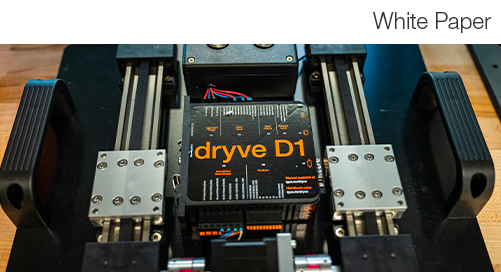
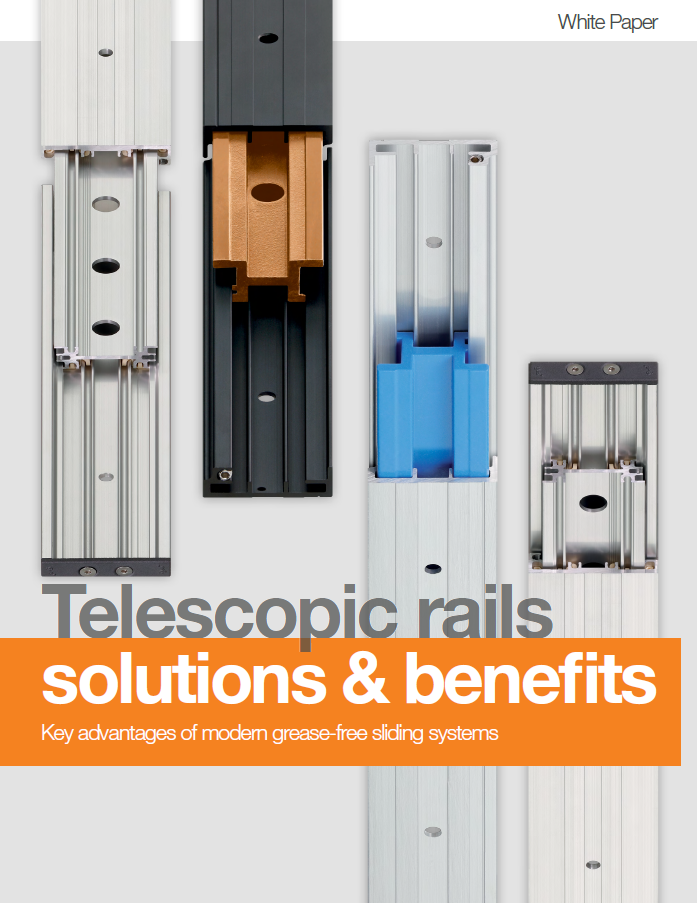
None of these is a rounding correction. A rail sized from its catalog figure and then mounted flat at full extension is a rail sized wrong. The gap between the two numbers is wide enough to matter. Our telescopic rails white paper plots load capacity against extension length and quantifies the penalty for flat mounting.
Which one is more accurate?
Linear guides, by a wide margin. That is the short answer, but it is rarely the answer that decides the project.
Telescopic rails are built for access, not positioning. Clearance between the nested profiles gives them play that a preloaded carriage does not have. Pre-load elements help take out rattle and reduce vibration, but they do not turn a rail into a positioning device. Profile rail guides are covered by their own dimensional standard precisely because positioning applications need that consistency.
Duty cycle is the other half of the answer, and it is the half that gets skipped. Access motion runs a handful of cycles per shift — a technician opens a drawer, works, closes it. Production motion runs continuously. Sizing for the first and then using it for the second is how a rail wears out years early.
Do telescopic rails need a motor?
Usually not. Most telescopic rails are moved by hand, sometimes assisted by a gas strut, and held open by a lock or a detent at a chosen engagement point.
That surprises engineers coming from automation, who expect every linear element to have a motor on the end of it. Saying it plainly matters, because ease of motion and holding force outrank torque and duty cycle once a person is the drive.
Linear guides go the other way. Once a drive and a motor are attached, the specification chain runs from stroke, load, speed, and duty cycle through screw pitch to motor torque to controller. If the machine has to command the motion rather than a person, the choice is already made.

Five questions that settle the choice
Work through these before opening a load table.
- Travel against space. Does the load have to leave the enclosure it sits in? A yes points to a telescopic rail.
- Positioning. Does anything downstream depend on where the moving element stops? A yes points to a guide.
- Cycles. Is this access motion or production motion? Count cycles per shift, not per hour.
- Actuation. Does a person move it, or does the machine?
- Environment. Are washdown, dust, temperature limits, or electrical isolation on the requirement list? Both families have answers here, and the answers differ.
Can you use both in the same machine?
Yes, and it leads to a better design when done correctly. The pattern repeats across industries: a telescopic rail carries a whole subassembly out for service, and driven linear guides do the working motion inside it. An analyzer drawer holds a small gantry. A cabinet pull-out carries a motor and controller rack. A machine safety door runs on rails while the process motion sits behind it.
Access motion and production motion are different jobs, with different cycle counts, different accuracy demands, and different people operating them. Machines that treat the two as one job are the machines that end up hard to service.
What about maintenance?
Steel ball cages need grease. Grease collects dust and metal fines, migrates onto product, and turns into a recurring cleaning task in food, medical, and laboratory settings. In a washdown zone it is more than a task, because a lubricant that moves is a contamination path.
Self-lubricating polymer sliding elements work differently. Solid lubricants run through the material rather than sitting on the surface, so the sliding face renews itself as it wears. There is no relubrication interval to schedule and no grease to specify.
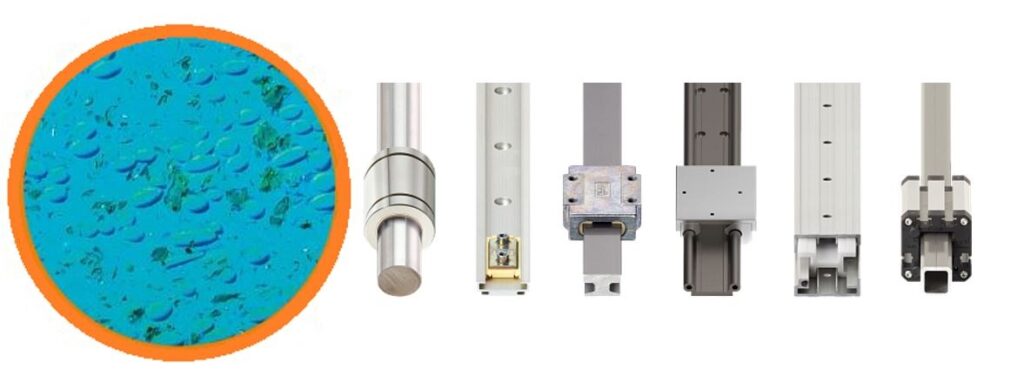
Three further differences separate polymer sliding systems from greased steel rails: weight, noise under motion, and electrical insulation where a conductive rail near live parts would be a hazard.
Where to go from here
igus® builds both families. On the telescopic side, drylin® N rails use polymer sliding elements in place of ball cages, which is where the grease-free, quiet, and lightweight arguments come from.
For a deeper look at telescopic rails and factors like load capacity against extension length, the derating for flat mounting, the material weight comparison, and temperature limits, read our white paper!
Frequently asked questions
A telescopic rail extends beyond its own installed length by sliding nested profiles apart, so the load can leave the machine. A linear guide moves a carriage along a fixed rail, so travel is always shorter than the rail. Rails are for access; guides are for positioning.
Sometimes, for access motion, where the load has to reach outside the machine and stopping position does not matter. Rarely for positioning, because clearance between the nested profiles gives a telescopic rail play that a preloaded carriage does not have.
Less than its catalog rating. Capacity falls as extension length grows, and falls again when the rails are mounted flat rather than as a facing vertical pair. Centering the load between the pair raises it.
Over-extension describes a telescopic rail that carries its load past the end of the outer profile, so the extended length exceeds the installed length. It gives access to the back of a drawer or tray, at the cost of load capacity and ease of motion.
Steel ball cage rails do, on a schedule. Rails built with self-lubricating polymer sliding elements do not, because solid lubricants are carried through the material itself. That removes the relubrication interval and the grease migration that comes with it.
Rarely. Clearance between the nested profiles gives a telescopic rail play that a preloaded linear guide carriage does not have. Pre-load elements reduce rattle and vibrations without removing that play. Specify a rail for access, and a linear guide where stopping position matters
Most do not. Telescopic rails are usually moved by hand, sometimes assisted by a gas strut, and held open by a lock or a detent at a chosen engagement point. Ease of motion and holding force matter more than torque in that case.
Yes, and many machines use both. A telescopic rail carries a subassembly out for service while driven linear guides do the working motion inside it. Access motion and production motion have different cycle counts and accuracy demands, so they suit different hardware.