

Modernizing the Royal Opera House with lightweight zig-zag e-chains®
Back in 1999, the Royal Ballet and Opera in London commissioned igus® to equip its lighting trusses with a space-saving, durable energy supply. igus developed a customized zig-zag e-chain® system that was in service for over 25 years without failure.
The theater modernized its lighting in 2025, requiring a new energy supply system that had to meet all new requirements in terms of load, weight, and smooth operation. The igus team was once again called upon, and ultimately delivered a modernized zig-zag system before the start of the 2025/26 season.
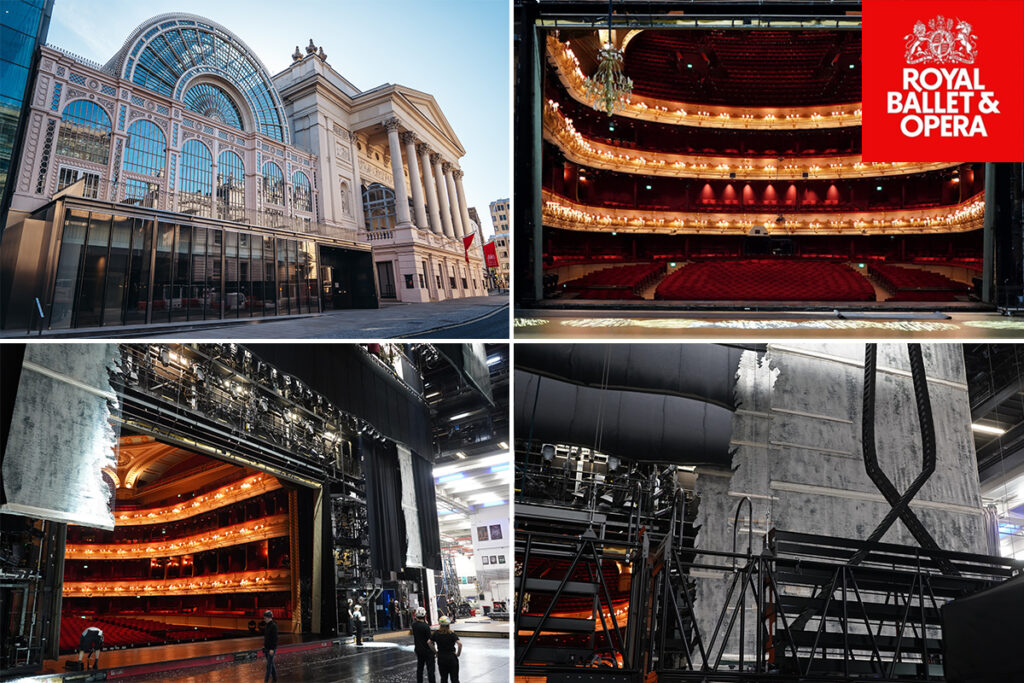
Background
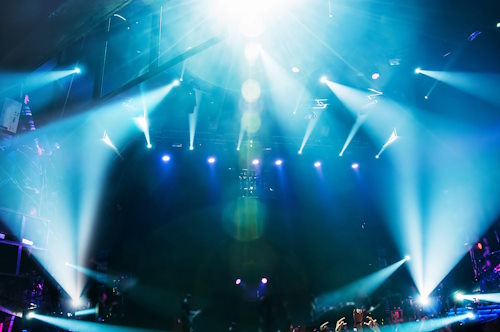
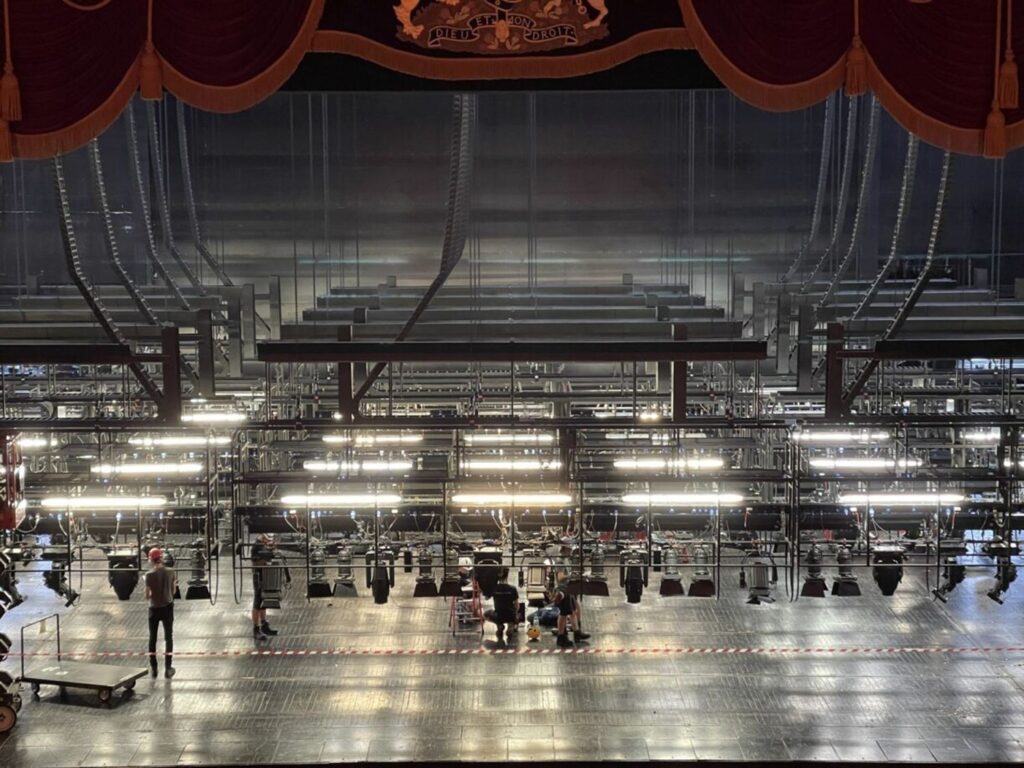
Even before its modernization, the upper machinery in the Royal Opera House offered an impressive view with its five vertically moving rows of beams, each equipped with countless halogen spotlights.
With the switch to modern LED technology in 2025, requirements for energy supply changed significantly. The new lights, although more energy efficient, were much heavier than the previous lights. This meant a completely new lightweight support structure had to be developed to stay within the load capacity limits of the existing suspension points.
Once this was realized, both igus and stage technology specialist HOF were brought in to develop a new solution and install it during the four-week window between seasons.
Problem
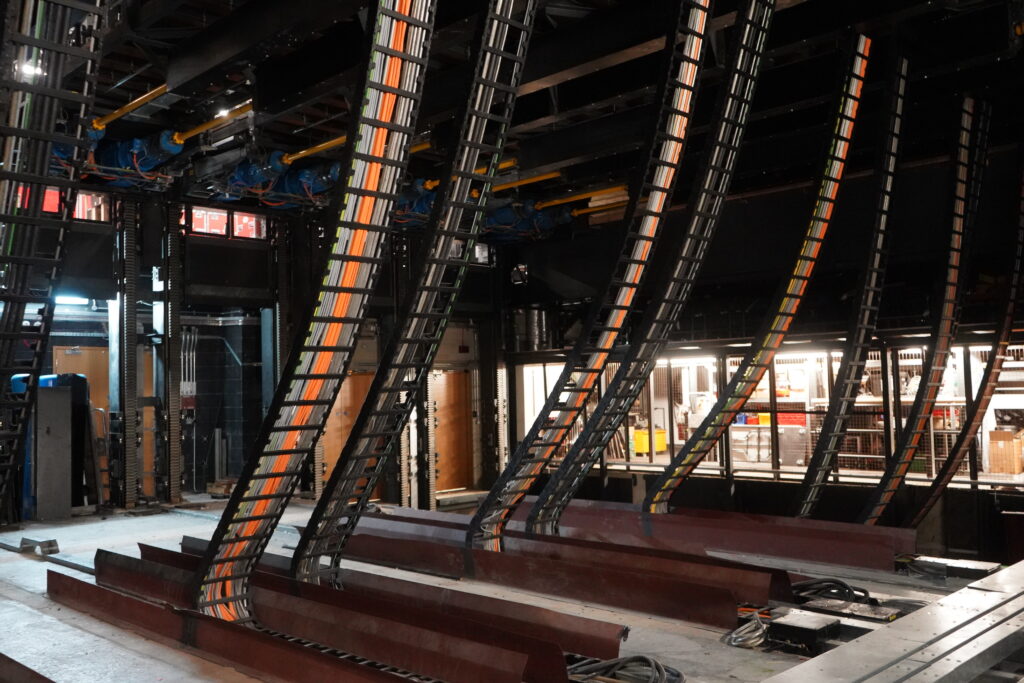
The new lighting hoists — developed, implemented, and installed by HOF — now comprise five rows of aluminum trusses, each 21 meters long. Each row consists of three closely spaced units that can be moved individually at speeds of up to 250mm/s to a height of over 25 meters. Each unit has a lower truss with the lights, and a main truss which is responsible for the load-bearing capacity — and this is where the new e-chain system had to be integrated.
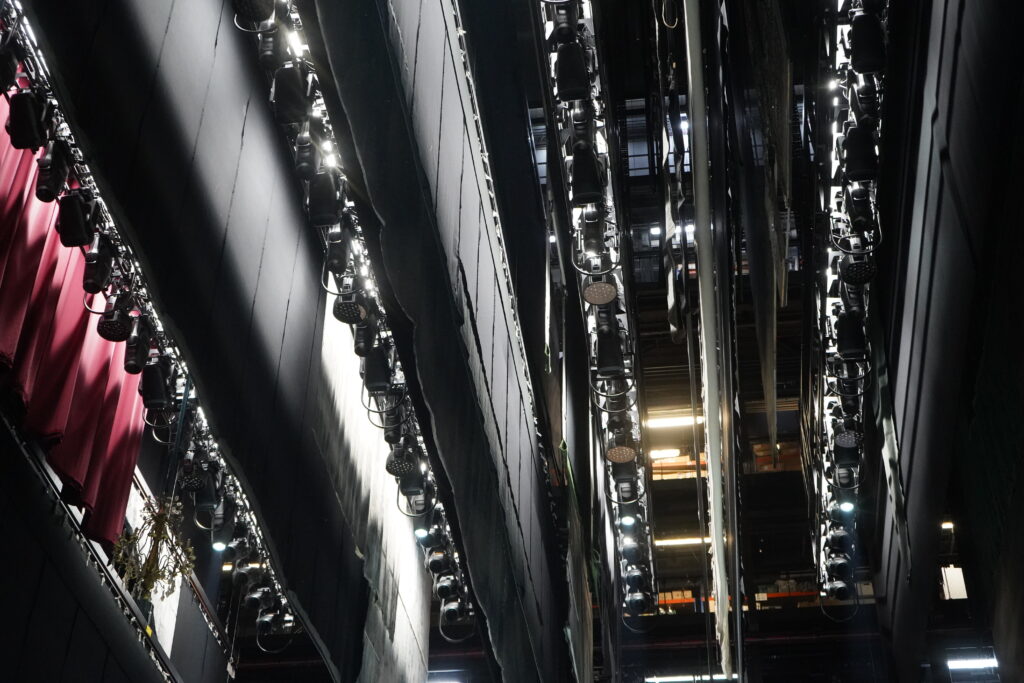
The Royal Opera House hosts up to 285 performances per year and just as many rehearsals. The lighting systems are in constant use from 7AM–11PM. The system must function reliably under this continuous load while remaining quiet and visually unobtrusive so as not to disturb the performance.
At first, the igus team considered other e-chain systems that have been successful in stage technology, such as motorized e-spools. However, due to the large volume of cables, the zig-zag solution was once again found to be the best option.
Weight and smooth operation were the biggest challenges to overcome. Zig-zag systems generate a slight pendulum impact during operation, which was exacerbated by the quantity and weight of the cables. Initial tests showed lateral deflections of up to one meter.
After prototyping, it was clear this effect had to be reduced in order to ensure safe and smooth operation. At the same time, the weight of the originally planned guide boxes had to be reduced from 440lbs to less than 330lbs.
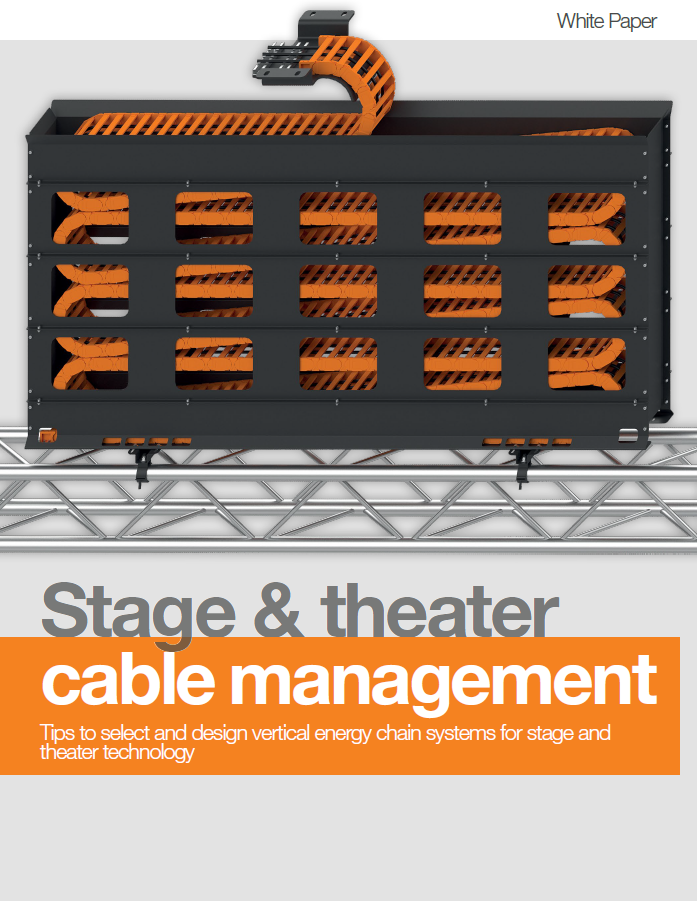
Solution
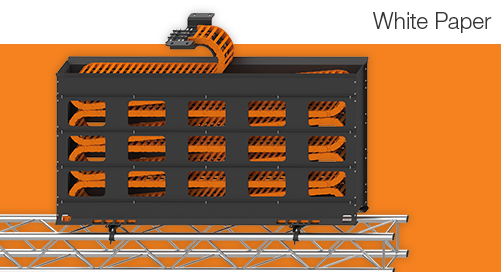
The pendulum deflection problem was solved by using a reverse zig-zag arrangement for the e-chains. By doing this, deflection could be reduced to just 20mm.
The guide boxes were able to be made lighter by replacing thick steel baskets with lightweight aluminum, along with removing excess material following a structural analysis. This brought the weight to less than 330lbs, meeting the design requirement.
Just in time for installation in August, igus delivered 20 ready-to-install zig-zag systems, equipped with E4.56 series e-chains and chainflex cables. The nearly 247lb cable packages contain motor, bus, data, fiber-optic, and control cables.
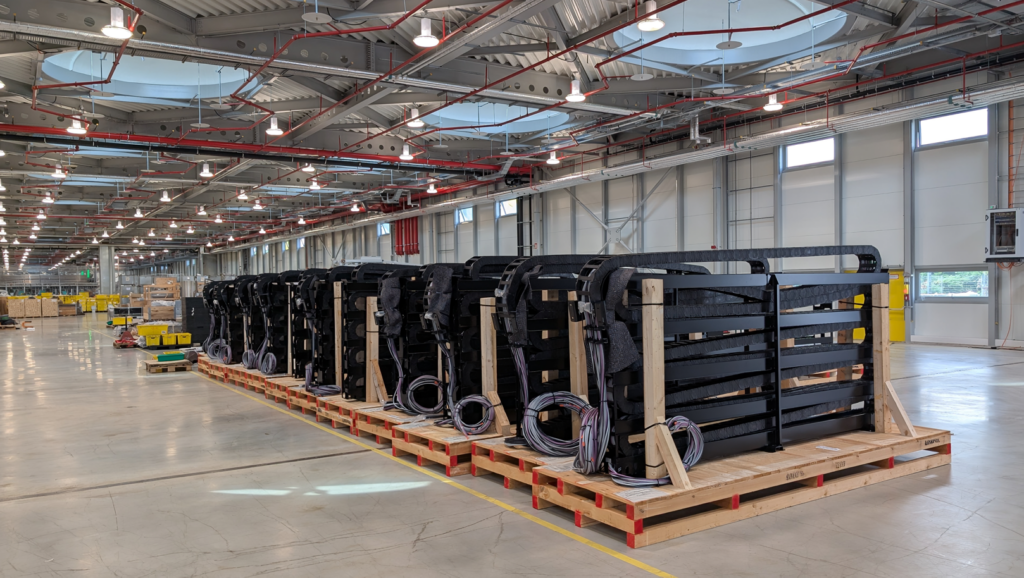
In total, there are now nine tons of energy chains with a combined length of over half a mile, which operate as reliably, quietly, and inconspicuously as the original solution. This new system is expected to outlast the 25-year mark set by the original.
The original e-chains have been reclaimed for reuse via the chainge® recycling program, avoiding the creation of 2.4 tons of waste and helping the Royal Opera House achieve its own sustainability goals.
Additional success below the stage
Convinced by the reliability of the zig-zag solution used in the trusses, the Royal Opera House decided in 2010 to use similar systems in machinery below the stage as well. These e-chains ensure the movable stage platforms are safely supplied with energy and data, and have also been operating trouble-free since they were first installed.