
Motion plastics for hygienic washdown design and CIP success
In food and pharmaceutical production, a machine’s ability to move is only half the battle. To ensure safety and maximize uptime, equipment must be engineered to survive the rigors of hygienic washdown design and clean-in-place (CIP) protocols. These essential processes — involving high-pressure sprays, extreme heat, and caustic chemicals — can quickly compromise traditional metal components through corrosion and lubricant washout.
By replacing grease-reliant metal parts with high-performance, self-lubricating plastics, manufacturers can eliminate the risks of contamination and corrosion while significantly reducing maintenance downtime
What is hygienic washdown design and clean-in-place?
Hygienic washdown design is an approach to designing food production and pharmaceutical equipment that allows washdowns to be carried out safely and effectively. Often this means eliminating areas food and bacteria could collect, such as hollow cavities and crevices, flat surfaces, or exposed threads, while also ensuring the materials used can withstand the high water pressure, high-temperature steam, and cleaning chemicals used in standard washdowns.
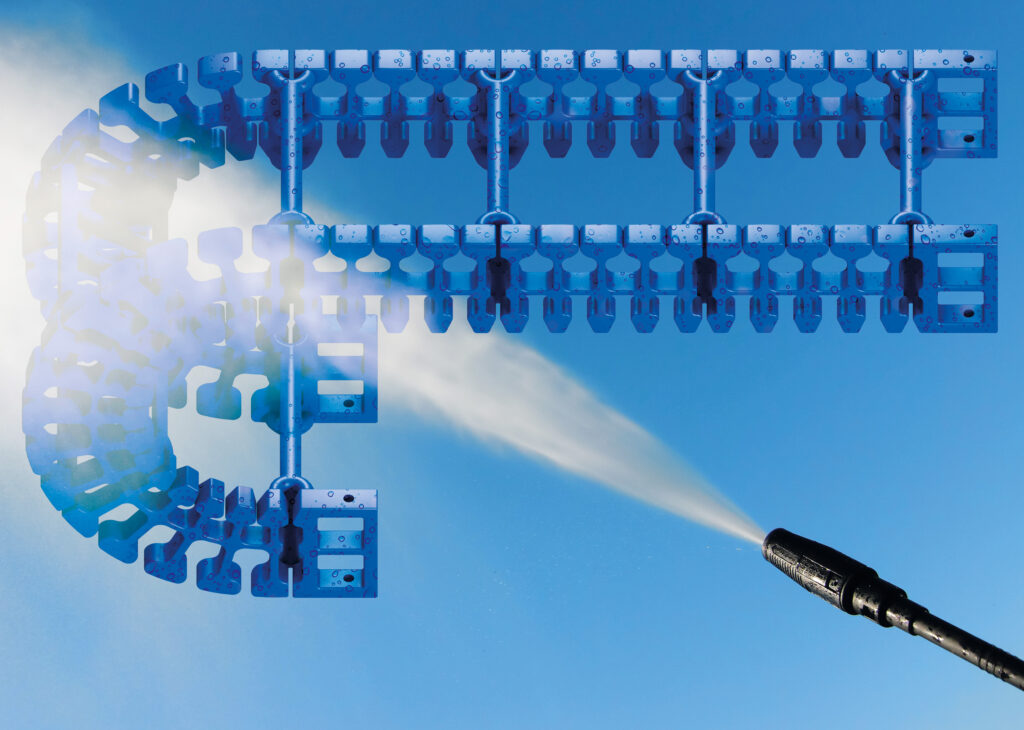
Clean-in-place is a method of cleaning the internals of processing equipment without the need for dismantling. Also common in food and pharmaceutical production, clean-in-place systems involve a rigorous series of rinses and washes before a final sanitization, after which equipment is ready to be used once again.
How washdowns and clean-in-place contribute to machine downtime
Washdowns and clean-in-place (CIP) practices are essential in food processing applications, yet are among the primary causes of machine downtime. To achieve the necessary cleanliness for food contact, extreme heat, high-pressure sprays, and chemicals are all used to treat componentry. This exposure makes corrosion a concern, even for stainless steel components.
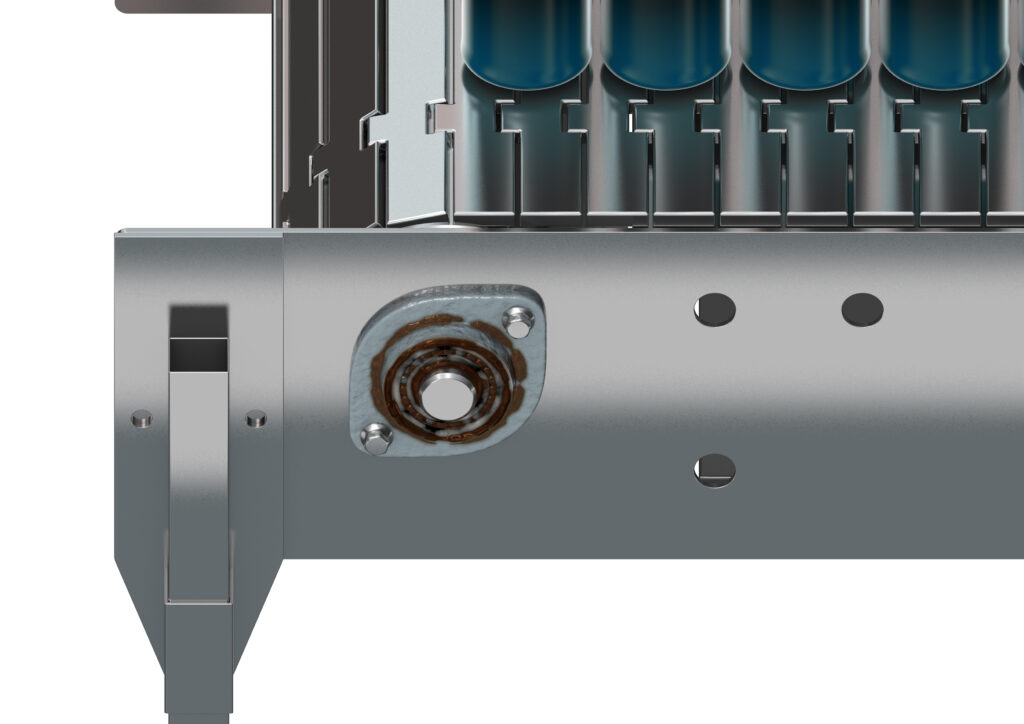
The frequent washing of components also requires workers to regrease bearing points if metal bearings are used. If this is not done properly, wear rates will increase and lead to premature bearing failure and unexpected downtime. Even if done properly, machines need to be shut down during the greasing process — during which time no products can be processed.
An alternative solution to metal parts
Both corrosion and the need to relubricate components can be eliminated by using self-lubricating plastic components from igus®. The materials available from igus are completely corrosion-free and offer resistance to common washdown chemicals. They also contain built-in solid lubricants that keep components running smoothly for their entire service life, eliminating downtime needed for greasing.
Read more: The critical role of grease-free plastics in sterile environments
Impacts of washdowns and CIP in real-world production lines
The different areas of food production lines can be broken up into two major zones: splash zones and food contact zones. Each has slightly different requirements for sanitization and the equipment materials used.
- Splash zones: Areas close to food processing equipment. These areas are exposed to splashes from washdowns of food contact surfaces, but are not intended for product contact and therefore have slightly less strict requirements for sanitization.
- Food contact zones: Areas that come into direct contact with food. Sanitization requirements for food contact zones are stricter, as contamination is more likely.
So where do washdowns and clean-in-place practices actually impact real-world production lines? The most at-risk areas are food contact zones, which include conveyors, filling and capping stations, and labeling or inspection zones.
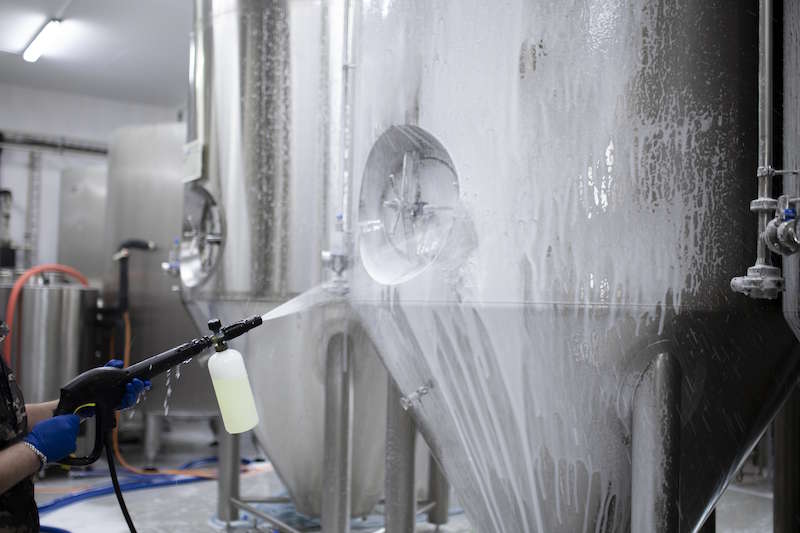
Daily cleaning and sanitization is required for food contact zones. The frequent exposure to high-temperature water, harsh cleaning chemicals — and even brine and vinegar in the case of pickle production — impacts the tolerances, wear, and resilience of components.
Application story: Minnesota company uses plastic energy chain to help solve processing pain
Splash zones face many of the same challenges, and if any crevices or chambers are present moisture can be trapped, risking not only product contamination but corrosion of components as well.
Common active cleaning ingredients & why they matter
Cleaning mixtures vary greatly, and blended formulas are the norm across all applications. Safety data sheets (SDSs) provide a complete list of the chemicals used on a production line, and are an OSHA requirement anywhere harsh chemicals are used. These sheets provide extensive information on chemical composition, handling and storage precautions, environmental impact, and more.
The chemicals used in food processing are as varied as the products themselves, and understanding their impact is vital for effective hygienic washdown design. Facilities often utilize caustic detergents like sodium or potassium hydroxide, acid cleaners such as nitric or phosphoric blends, and oxidizing sanitizers like peracetic acid.
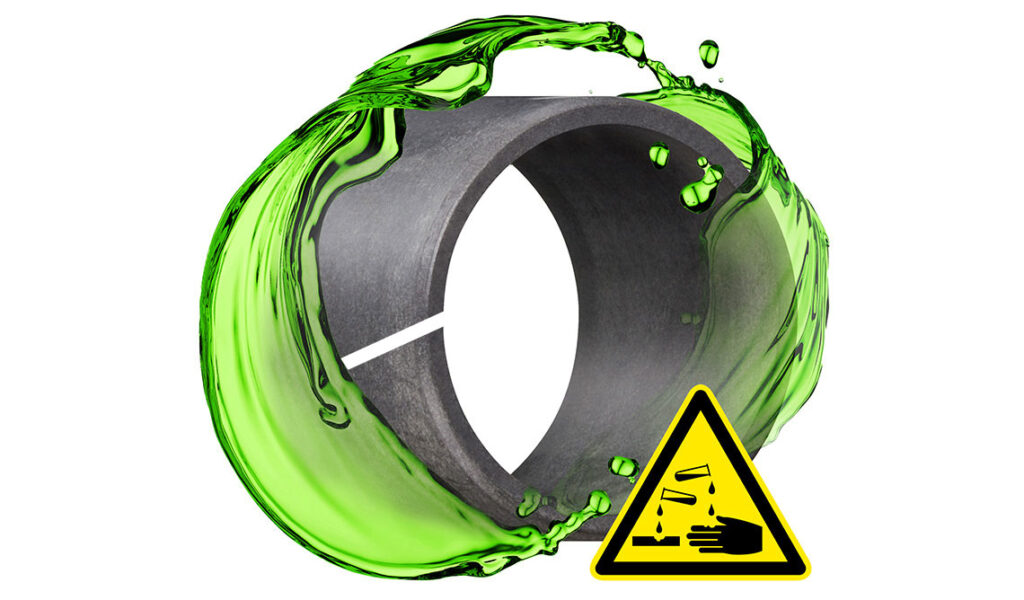
Chlorine-based sanitizers are especially notorious for triggering a corrosion-driven chain reaction that increases wear in metal parts. For unique applications like pickle production, the inherent acidity of the product requires stronger alkaline cleaning before sanitizers can even be applied, creating further risk of corrosion and wear.
To ensure maximum uptime, material selections must be matched to a plant’s specific chemical set rather than relying on generic "washdown-safe" labels. igus provides a range of specialized materials, from the highly temperature-resistant iglide® X to FDA-compliant A160, A180, and A500 materials, alongside igubal® FC and detectable plastics, to meet the needs of any CIP system.
Key takeaways
Ultimately, a successful food production application will use equipment designed to not only move smoothly and with little friction or wear, but withstand washdowns as well. Designing for washdown compatibility means looking beyond the motion of the machine and focusing on hygienic fundamentals. This includes ensuring drainage to prevent fluid pooling, utilizing open geometry to eliminate hidden "dead zones" where bacteria can thrive, and incorporating rounded features that allow cleaning agents to flow freely.
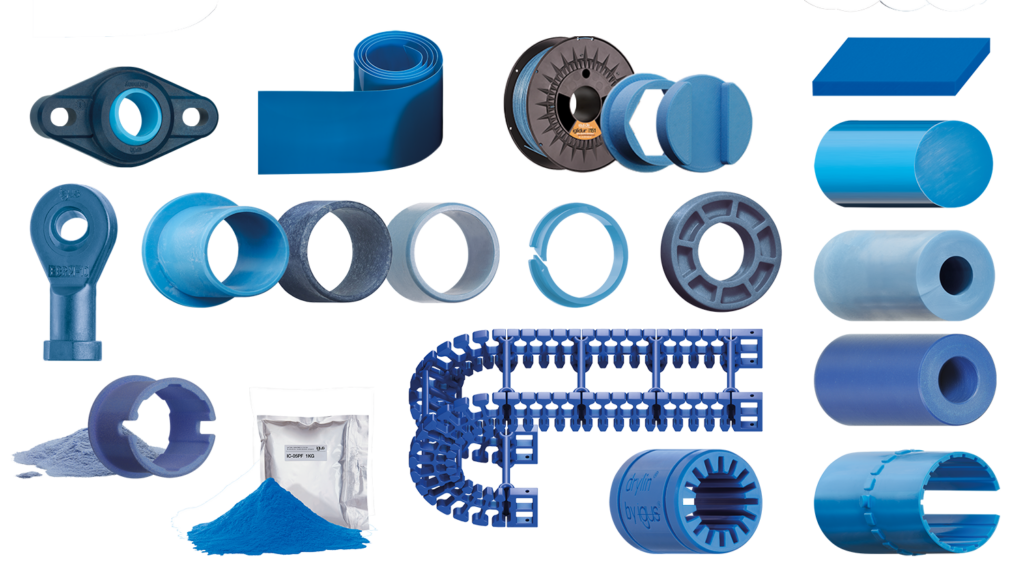
To address these specific challenges, igus provides a suite of high-performance polymers engineered to replace traditional, grease-reliant metal components:
- e-chain® TH3: A world-first hygienic cable carrier with an open design for easy cleaning and high chemical resistance.
- iglide® Plain Bearings: Dry-running bearings available in dozens of materials to meet unique application needs.
- drylin® Linear Systems: Corrosion-resistant guides that operate reliably without external lubrication.
- xiros® Rollers & tribotape: Maintenance-free conveyor components and wear strips that reduce friction while standing up to harsh detergents.
To ensure a component is correctly spec’d for your specific washdown environment, you should always verify the application against a strict checklist:
- Chemistry: Provide a full chemical list or SDS (Safety Data Sheet).
- Concentration: Note the dilution ratio of cleaning agents (e.g., 5% caustic).
- Environment: Operating and cleaning temperatures plus "dwell time" (how long chemicals sit).
- Process: Spray pressure (e.g., IP69K standards) and frequency of cleaning cycles.
By designing for the unique chemical and thermal demands of your washdown environment rather than just basic machine motion, you can eliminate the risks of corrosion- and lubrication-related failure. Ultimately, matching the right high-performance polymers to your specific cleaning protocols ensures a safer, more hygienic production line with maximum operational uptime.