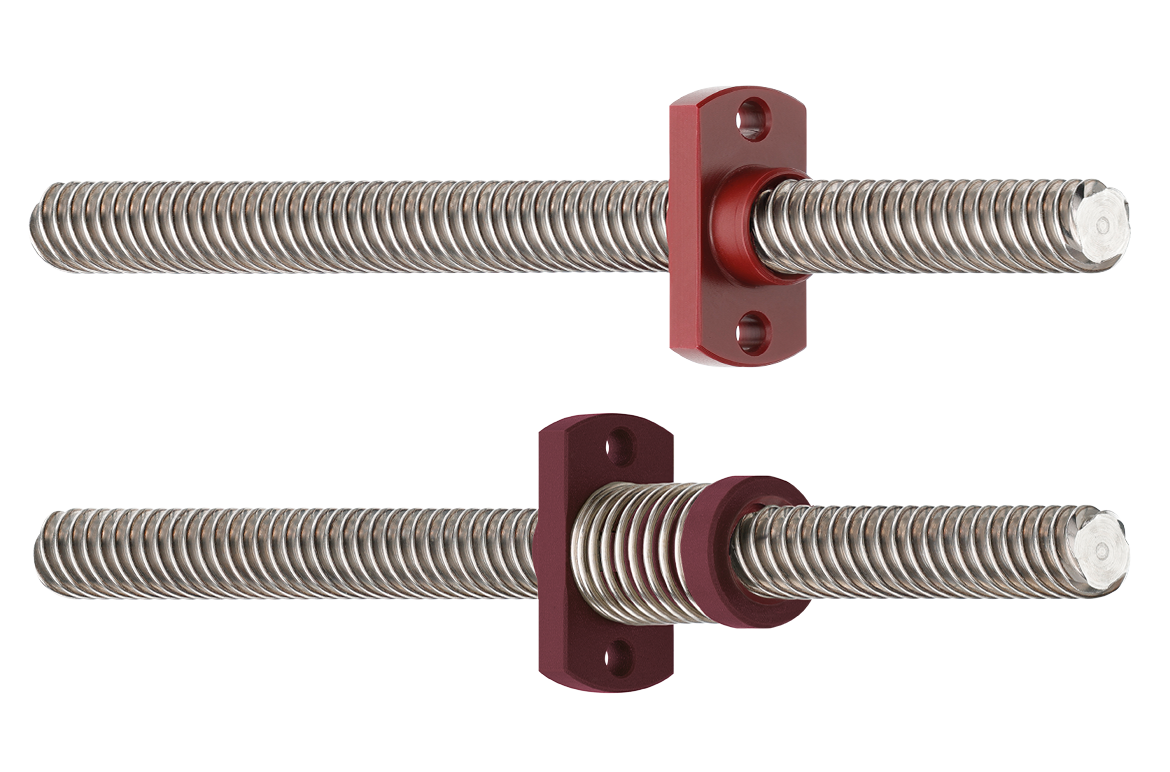


ACME vs. trapezoidal lead screws: everything you need to know
In the world of linear motion, lead screws are a foundational component for converting rotary motion into precise linear travel. They enable linear motion in everything from medical devices and laboratory automation to packaging machinery and industrial positioning systems.
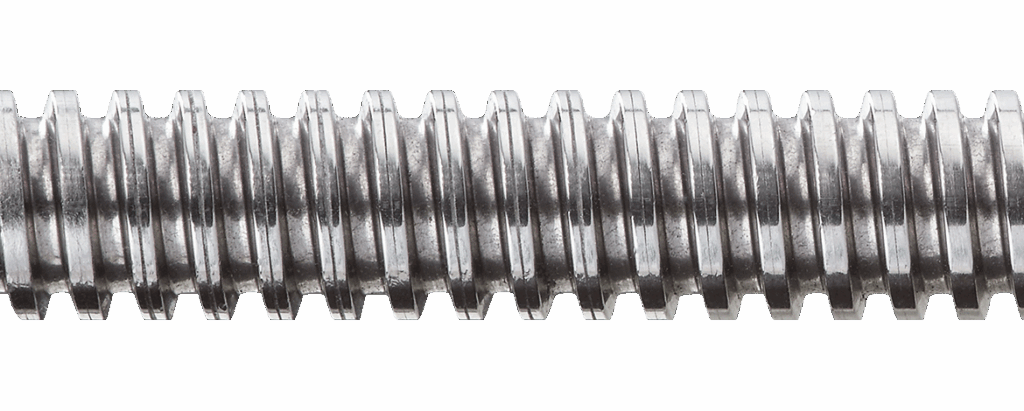
However, engineers often find themselves at a crossroads when choosing between ACME and trapezoidal lead screws. While they are functionally very similar, the subtle differences in measurement standards and system integration can significantly impact a design's success. Understanding these nuances is key to selecting the right component for your motion system.
White Paper: The ACME Lead Screw System
Overview of lead screw thread standards
The distinction between ACME and trapezoidal screws is primarily rooted in regional history and measurement standards.
- ACME Thread: Developed for imperial, inch-based systems, ACME threads are the standard in North America. They are defined by threads per inch (TPI).
- Trapezoidal Thread: Defined by ISO metric standards, these are the go-to for European and international machinery. They are measured by their diameter, lead, and pitch in millimeters.
These standards exist because of historical industrial adoption in different parts of the globe. When designing a new system or maintaining a legacy machine, compatibility with the surrounding hardware — be it an inch-based North American design or a metric-based global OEM product — is often the deciding factor.
Thread geometry: the 1° difference
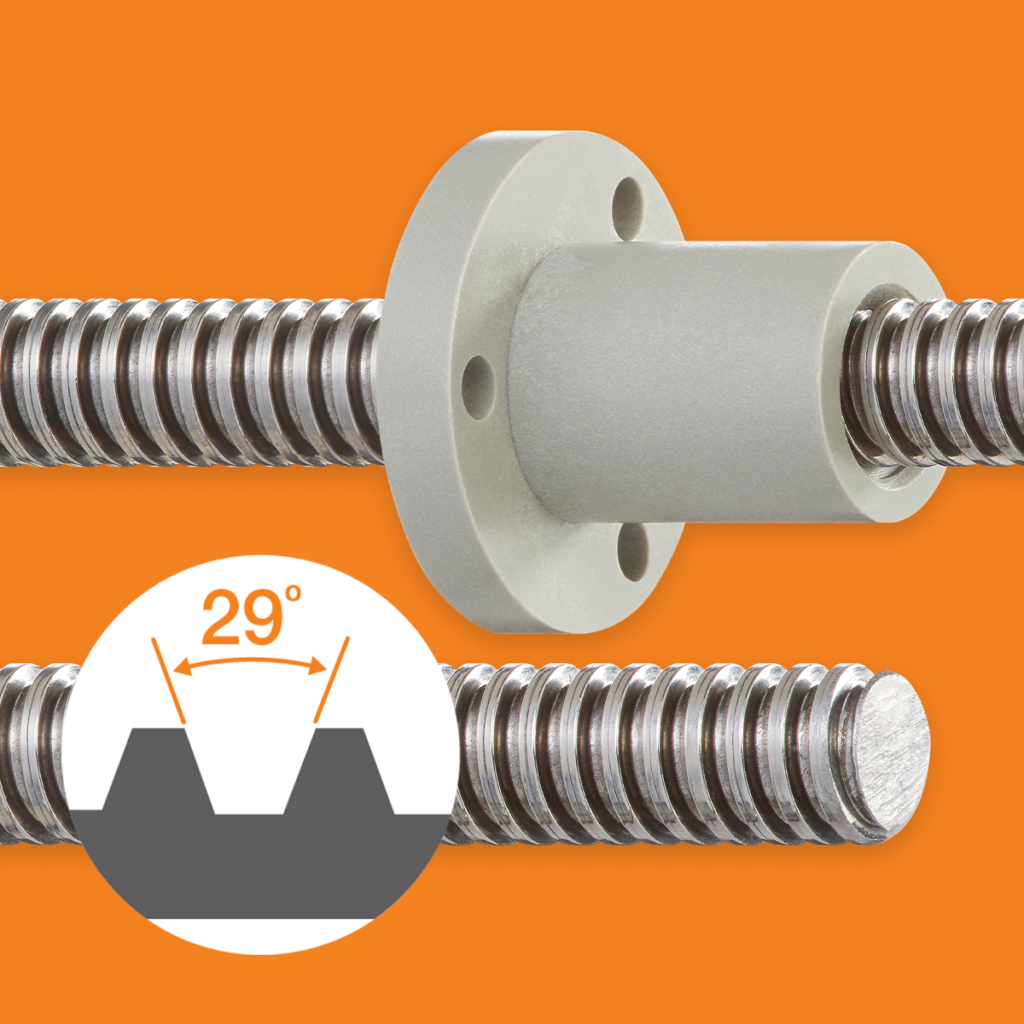
The main technical difference between ACME and trapezoidal screws is their thread angle. An ACME thread features a 29° angle, while a trapezoidal thread features a 30° angle. Both designs were originally developed to improve strength and ease of manufacturing compared to older square thread designs.
While the 1° difference exists, it has a minimal effect in most applications. Performance characteristics regarding load distribution are nearly identical. In the grand scheme of design, factors like materials, lubrication, lead, and self-locking capabilities are far more critical than this tiny geometric variation.
Measurement differences: imperial vs. metric systems
The most significant practical difference between these two screw types isn't how they look, but how they are measured.
ACME measurements
ACME screws use a format where the lead is derived from the number of threads. You will typically see them labeled in formats such as 1/2"-10 or 3/4"-6.
Trapezoidal measurements
Trapezoidal screws are much more direct, defined by their diameter and lead in millimeters. Common examples include Tr16x4 or Tr20x5.
Understanding lead vs. pitch
To design effectively, you must distinguish between pitch (the distance between individual threads) and lead (the actual linear distance traveled per one full revolution). This becomes especially important with multi-start screws, where the lead can be several times the pitch, directly impacting the linear speed of your system.
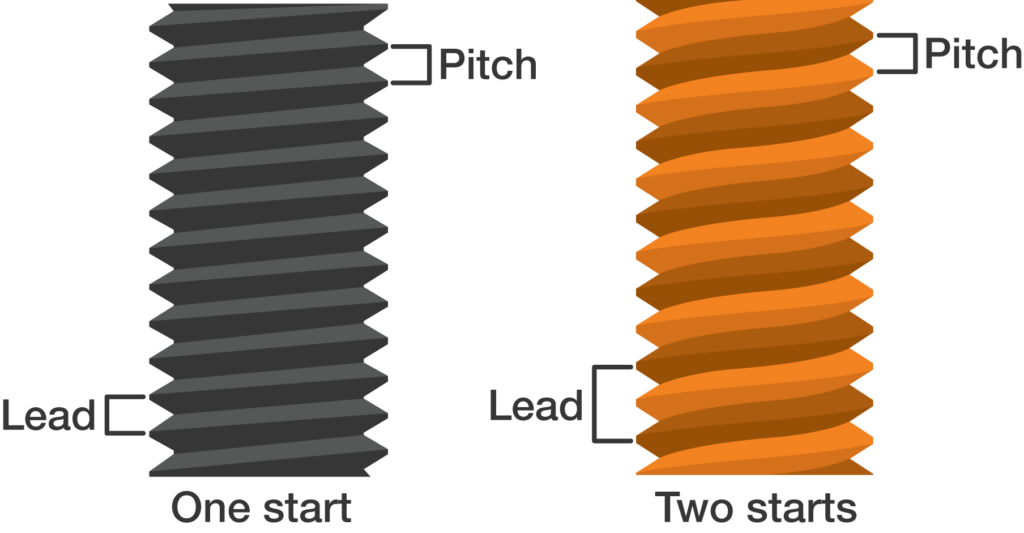
Blog: What is screw pitch, and how is it different from screw lead?
Performance comparison in linear motion systems
Both ACME and trapezoidal screws operate as sliding contact systems. Because they rely on friction rather than rolling elements, they generally have lower efficiency than ball screws and are best suited for moderate loads and speeds.
Most systems using these screws operate under 150 RPM; pushing beyond this can introduce excessive heat and wear. However, they offer a unique advantage: self-locking characteristics. In vertical applications, the friction of the threads can prevent backdriving, often eliminating the need for expensive additional brakes.
Retrofitting and motion control considerations
The real headache for engineers occurs during a retrofit. If you switch from an ACME to a trapezoidal screw (or vice versa), the entire system will need to be reconfigured, not just the lead screw.
Because the lead will likely mismatch, your motor controller will require reprogramming or recalibration. Failing to account for changes in step resolution can lead to significant positioning errors. Whether you are using stepper, DC, or servo motors, the controller must be updated to reflect the new linear-to-rotary ratio.
Modern lead screw solutions
Modern engineering has moved beyond basic metal-on-metal designs. Innovations like polymer nuts offer distinct advantages over traditional metal nuts, including:
- Reduced friction and higher efficiency
- Maintenance-free operation with no need for external lubrication
- Lower noise and longer service life
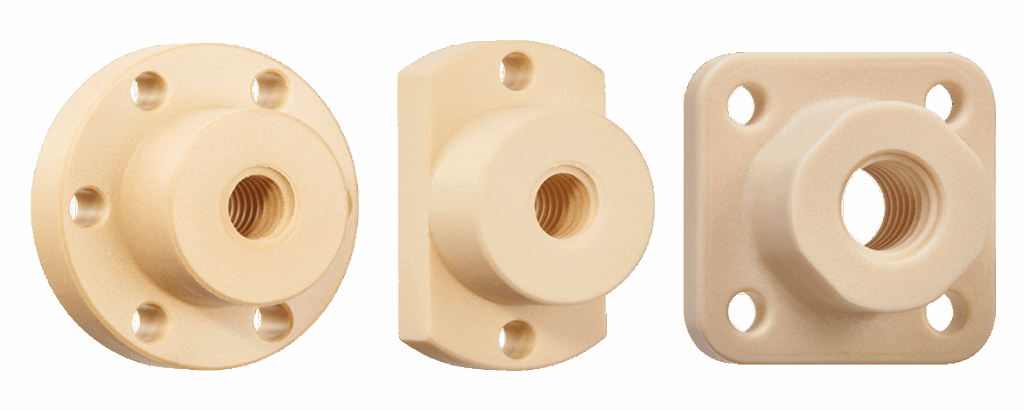
Technologies such as dryspin® polymer lead screw nuts optimize lead screw design and keep machines running smoother for longer.
Conclusion
At the end of the day, ACME and trapezoidal lead screws are nearly identical in their core function. The decision usually comes down to whether your project is metric or imperial and whether you are dealing with a legacy system or a global product.
When selecting your screw, always keep a checklist of your load requirements, desired linear speed, screw length, and environmental conditions. Taking the time to verify compatibility now will ensure a reliable, high-performing system later.