

3 Tips When Choosing Bearing Dimensions
Usually, it is the surrounding factors such as housing hole circumference, shaft materials and other components that predetermine what the dimensions of your plain bearing should be. So, what happens when these factors start to constrain your choices so tightly that only a custom-made bearing will solve the problem? Before things get to that point, there are some pitfalls that can be avoided if sensible design decisions are made throughout the design process. Here are three tips on how to accurately choose the right bearing dimension from the start.
Thin-walled plain bearings: Choose the right materials and manufacturing methods
Plain bearings with wall thicknesses of less than 1mm or even 0.5mm are extremely difficult to make depending upon the other dimension factors. When it comes to manufacturing metal plain bearings, it all comes down to whether or not metal sheets with dimensional stability are available. However, when it comes to plastic plain bearings, the design and the reliability of the actual injection mold process are the deciding factors, which can become complicated when attempting to manufacture bearings that combine taller lengths with smaller diameters. These can also be more difficult to de-mold. Shaft coatings can be a potentially decent alternative to thin-walled plastic plain bearings, and only requires that you choose the appropriate coating. These coatings can be applied in thicknesses from just a few µm to several hundred µm—learn more about our tribo-coatings here.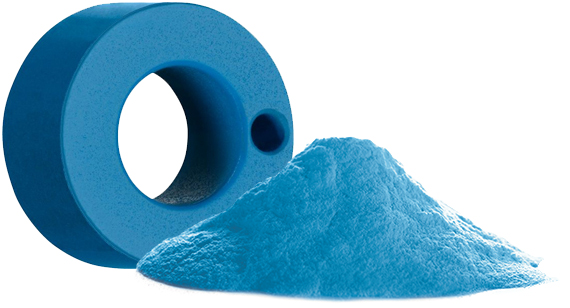
Coating powder and coated components made of metal (source: igus SE & Co. KG)
Thick-walled plain bearings: Thicker isn't always better
As we already discussed in a previous post, thicker walls do not necessarily offer advantages in regard to load-bearing capacity and wear behavior for plain bearing, even with plastic plain bearings. Nevertheless, plain bearings made from high-strength plastic materials mean less weight, even with thick walls, while also enabling you to save money due to the more cost-effective materials and manufacturing methods in contrast to steel or bronze. Manufacturing plastic plain bearings with thick walls can incur further risks if produced via injection molding since thicker elements of a component tend to “sink in” afterwards causing smaller or larger indentations onto the surface of the component. This can be avoided by implementing well-placed recesses or frame-like supporting constructions. When injection molding is unable to produce polymer bearings according to your exact requirements, there are other methods available—for example, wound bearings made from a filament-fabric are a flexible and comparatively cost-effective manufacturing method.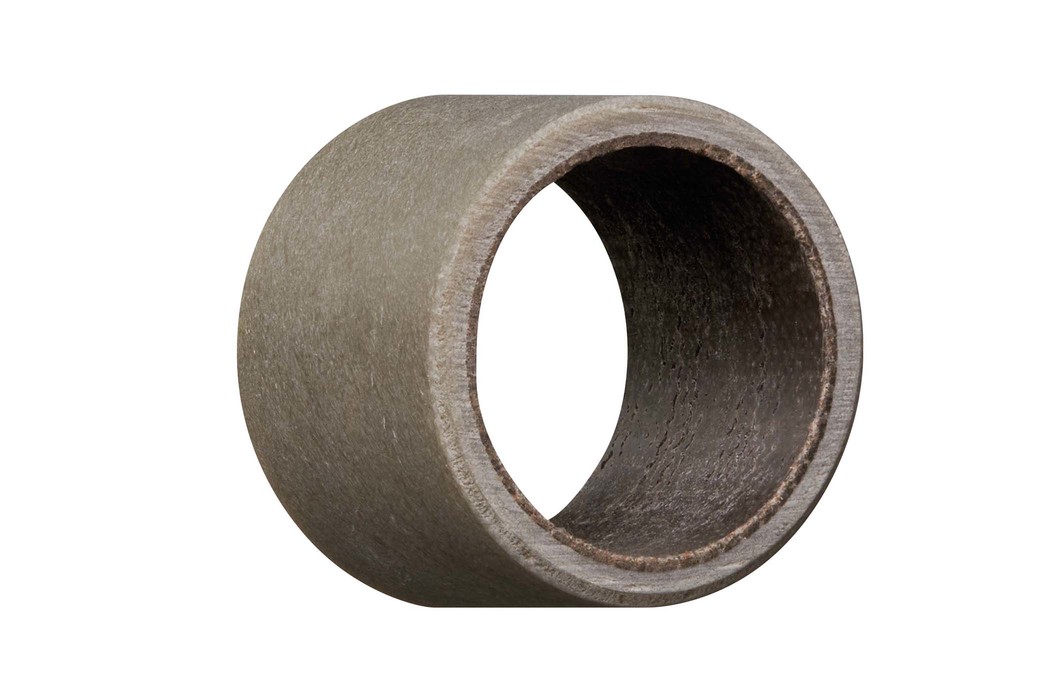
“Roving”-wound plain bearings made of filament fabric (source: igus SE & Co. KG)